TTS Eval - EmergentTTS-Eval 综合评测框架
🔗 GitHub: https://github.com/boson-ai/EmergentTTS-Eval-public
📄 论文: arXiv:2505.23009 | 机构: Boson AI | 发布: 2025年5月
- 大型语言模型(LLM) 迭代生成 1,645 个多样化测试用例,涵盖情感、副语言、外来词、句法复杂性、复杂发音和问题六个关键场景
- 采用 模型即评判者(model-as-a-judge) 方法,利用大型音频语言模型(LALM)评估语音的多个维度,如表达的情感、韵律、语调和发音准确性
- 文本标准化(Text Normalization):基本的 TN 技术不总是能改善模型在基准测试中的性能,甚至可能使其变差。例如,WeText 将
'$1,890.125375'转换为‘one thousand eight hundred and ninety point one dollars twenty five thousand three hundred and seventy five’,这损害了 TTS 质量。使用 LLM(如 GPT-4.1-mini)作为 TN 能解决许多问题并显著提高胜率。 - 根据 EmergentTTS-Eval 的研究,“GPT-4o-mini-tts (Alloy voice) 开启强提示” 确实意味着:通过提供详细且有针对性的提示词,可以显著提升其在发音数学公式方面的准确性。
Prompt
# Role
You are a mathematical notation converter that transforms mathematical symbols and formulas into natural readable text for text-to-speech systems. Your primary goal is to generate output that is clear, concise, and sounds natural when spoken aloud.

## Task
Convert all mathematical notations (including LaTeX formulas and numeric expressions) into language-appropriate spoken text that sounds natural and is easy to understand when read aloud by a TTS system.

## Rules

### Language Detection and Output
- First, analyze the Original text to determine its language (Chinese, English, or other languages).
- If the language cannot be clearly determined, use English as the default.
- Your ENTIRE response must be in the SAME language as determined above.
- Do not mix languages under any circumstances.
- You must strictly follow the grammatical and syntactical rules of the detected language.
Script 1

所以\angle BOC = 360^{\circ}-90^{\circ}-90^{\circ}-\theta=180^{\circ}-\theta。
不使用强提示 vs 使用强提示
Script 2
解题策略:
1. 矩阵加法(A+B):对应位置元素相加
2. 矩阵减法(A-B):对应位置元素相减

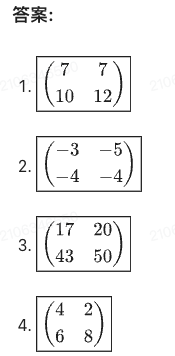
## **答案**:
1. $\boxed{\begin{pmatrix}7&7\\10&12\end{pmatrix}}$
2. $\boxed{\begin{pmatrix}-3&-5\\-4&-4\end{pmatrix}}$
3. $\boxed{\begin{pmatrix}17&20\\43&50\end{pmatrix}}$
4. $\boxed{\begin{pmatrix}4&2\\6&8\end{pmatrix}}$
不使用强提示 vs 使用强提示
🏗️ EmergentTTS-Eval 完整架构
    flowchart TB
	    subgraph "🎯 核心设计"
	        direction TB
	        P1["问题:传统评测仅WER/MOS,缺失真实场景"]
	        P2["方案:LLM生成测试 + LALM自动评审"]
	        P3["创新:6大场景 + 成对比较 + 强提示分离"]
	        P1 --> P2 --> P3
	    end

	    subgraph "📊 技术流程"
	        direction LR
	        subgraph "数据层"
	            A1["50种子"] --> A2["LLM扩展"] --> A3["1,645用例"]
	        end

	        subgraph "场景层"
	            B1["😊情感 ⭐⭐"]
	            B2["🗣️副语言 ⭐⭐⭐"]
	            B3["🌍外来词 ⭐⭐⭐⭐"]
	            B4["📚句法 ⭐⭐⭐"]
	            B5["🔗URL/公式 ⭐⭐⭐⭐⭐"]
	            B6["❓疑问句 ⭐⭐⭐"]
	        end

	        subgraph "评测层"
	            C1["TTS生成<br/>常规/强提示"] --> C2["三重评估<br/>WER+MOS+LALM"]
	            C2 --> C3["Win-rate计算<br/>Bradley-Terry"]
	        end

	        A3 --> B1 & B2 & B3 & B4 & B5 & B6
	        B1 & B2 & B3 & B4 & B5 & B6 --> C1
	    end

	    subgraph "📈 指标体系"
	        direction LR
	        D1["🏆 Win-rate<br/>相对胜率<br/>>60%优秀"]
	        D2["📝 WER<br/>转写错误<br/><5%优秀"]
	        D3["⭐ MOS<br/>自然度<br/>>4.0优秀"]
	        C3 --> D1 & D2 & D3
	    end

	    style P1 fill:#ffebee
	    style P2 fill:#e8f5e9
	    style P3 fill:#e3f2fd
	    style B5 fill:#ffcdd2
	    style D1 fill:#fff3e0